[
September 7, 2026
]
Post-Quantum Crypto-Agility, Validated in Orbit

Our crypto-agility framework has completed its in-orbit validation.
Post-quantum cryptographic algorithms from the NIST standardisation programme ran end to end on commercial flight hardware in low Earth orbit.
And the data came back.
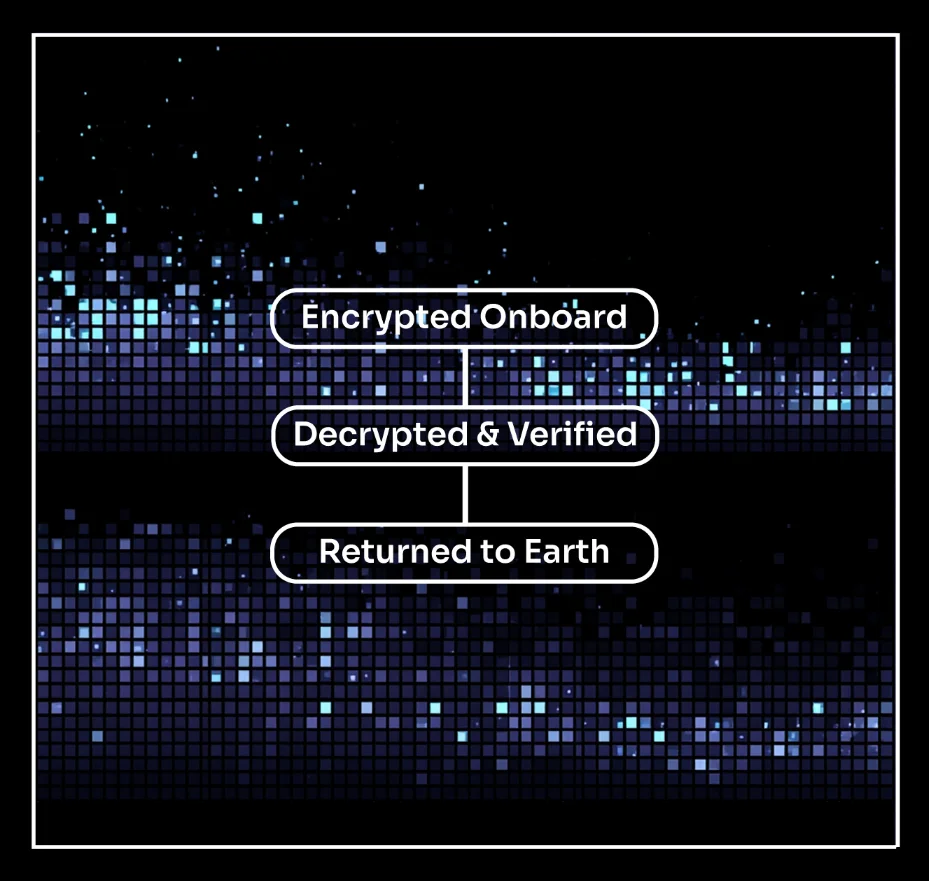
Encrypted mission data was generated and processed onboard, returned to Earth, and decrypted through EnsoLab’s crypto-agility framework.
For each cryptographic configuration, the decrypted output was verified against the corresponding mission telemetry.
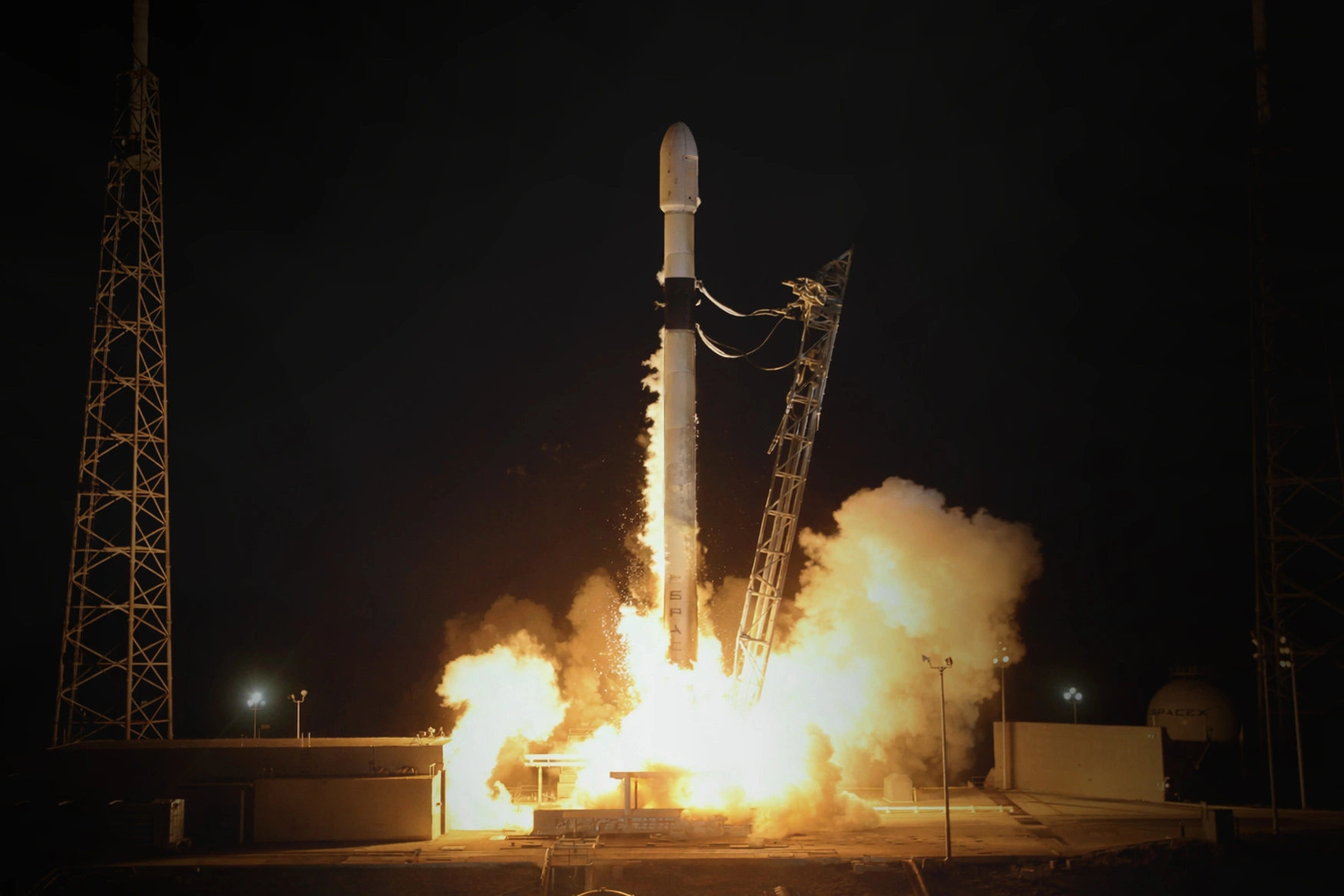
The work was carried out through our SkyBridge payload, launched on 30 March 2026 from Vandenberg Space Force Base in California aboard SpaceX’s Transporter-16 rideshare mission.
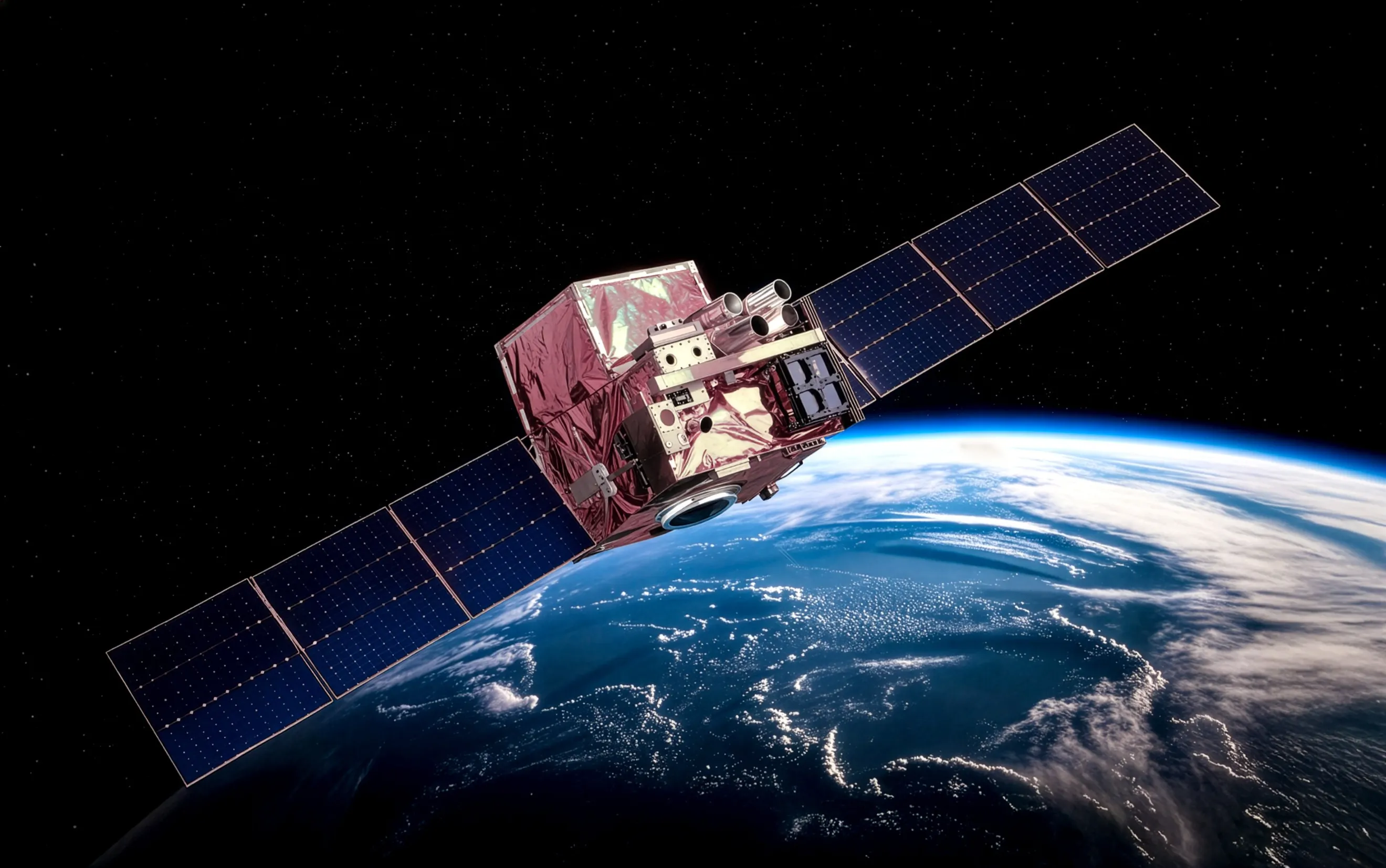
The payload operated through DPhi Space’s Clustergate-2 platform aboard the Momentus Vigoride 7 Orbital Service Vehicle in low Earth orbit.
We exercised multiple cryptographic configurations across variable-size telemetry and at different points in the orbit.
Together, these tests demonstrate that the architecture can operate across different cryptographic approaches rather than depending on a single algorithm or fixed cryptographic stack.
Ground testing can reproduce or simulate many individual aspects of a space environment, including radiation exposure, thermal conditions, latency and hardware behaviour.
What it cannot fully reproduce is the complete operational environment of a functioning spacecraft in orbit.
Real flight introduces the interaction of spacecraft hardware, communications constraints, orbital conditions, operational timing and the surrounding mission infrastructure.
That distinction matters.
Before launch, we developed and validated the framework on the bench in Switzerland. We then tested it on DPhi Space’s engineering model, a ground-based counterpart of the system that would ultimately fly.
The final step was to move from simulation and engineering models to operational flight hardware.
Flight validation provides evidence that laboratory testing alone cannot.
“Reaching orbit was an important milestone for EnsoLab, but for me, the greater achievement was proving that the technology could actually perform there. In orbit, there is virtually no margin for error. We had to demonstrate the architecture on operational flight hardware, working with live telemetry from orbit to the ground, under real mission conditions.
What makes this particularly important is the crypto-agility. We are not simply protecting data with one fixed algorithm. The architecture is designed to dynamically select or switch cryptographic algorithms at the message or session level as security requirements evolve. Taking that capability from an idea, through engineering and testing, and successfully executing it in orbit required extraordinary precision from the entire team.”
Masood Shaikh Mohammed, Founder & CEO, EnsoLab Tech AG
Post-quantum cryptography is not a single algorithm.
Different cryptographic approaches have different characteristics, performance profiles, key sizes, signature sizes and implementation requirements. Standards will continue to evolve, and future vulnerabilities or mission requirements may require one algorithm to be replaced by another.
A crypto-agile architecture is designed for that reality.
Instead of building an entire system around one cryptographic choice, the architecture allows different cryptographic suites to operate through a common framework.
That means algorithms can be changed or selected as security requirements, standards, performance constraints or threat conditions evolve, without rebuilding the complete communications architecture around them.
Making that interoperability work is one of the difficult parts.
“These algorithms were not originally designed to work in conjunction with one another; rather, each was developed and optimized for a different objective, such as minimizing model size, reducing runtime, or improving computational efficiency.
Integrating these algorithms into a unified, end-to-end framework capable of operating autonomously in orbit, while remaining fully transparent to the user, represents a significant achievement. Demonstrating this integrated functionality in an operational space environment through the mission provides compelling evidence of the feasibility and effectiveness of the approach.”
Prof. Andrea Guerrieri, Head of the Adaptive Heterogeneous Systems Laboratory, HES-SO Valais-Wallis, and technical lead for the programme
The framework was first developed and validated on the bench in Switzerland.
It was then tested on DPhi Space’s engineering model before being migrated to the flight system.
Following launch, the spacecraft operator conducted the normal commissioning and integrity assessments required before payload operations began.
The validation data reported here was collected during execution campaigns in April and May 2026.
Tests were conducted across selected orbital positions rather than continuously around the entire orbit. Execution timing was also affected by spacecraft operational constraints and communications latency outside the payload itself.
Further campaigns using the same architecture are anticipated.
SkyBridge was developed with our academic and mission partners, including HES-SO Valais-Wallis, DPhi Space and Momentus.
We are grateful to everyone who helped take the programme from concept, to laboratory validation, to engineering model, to operational flight hardware.
Not locked to one algorithm.
Engineered to adapt.
Validated in orbit.
These results now provide the foundation for further development, partnerships and early commercial applications in secure communications, both on Earth and in orbit.
0